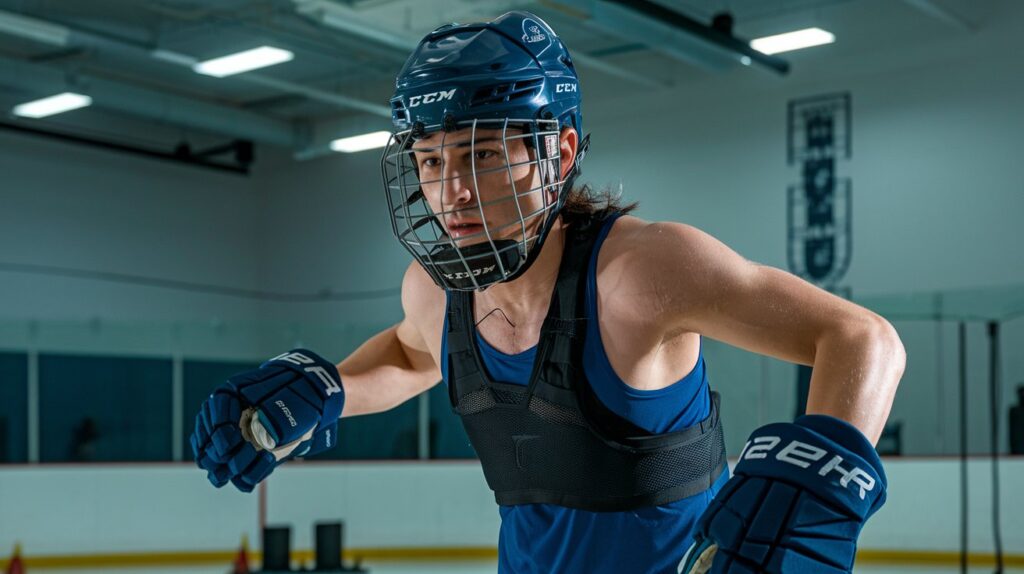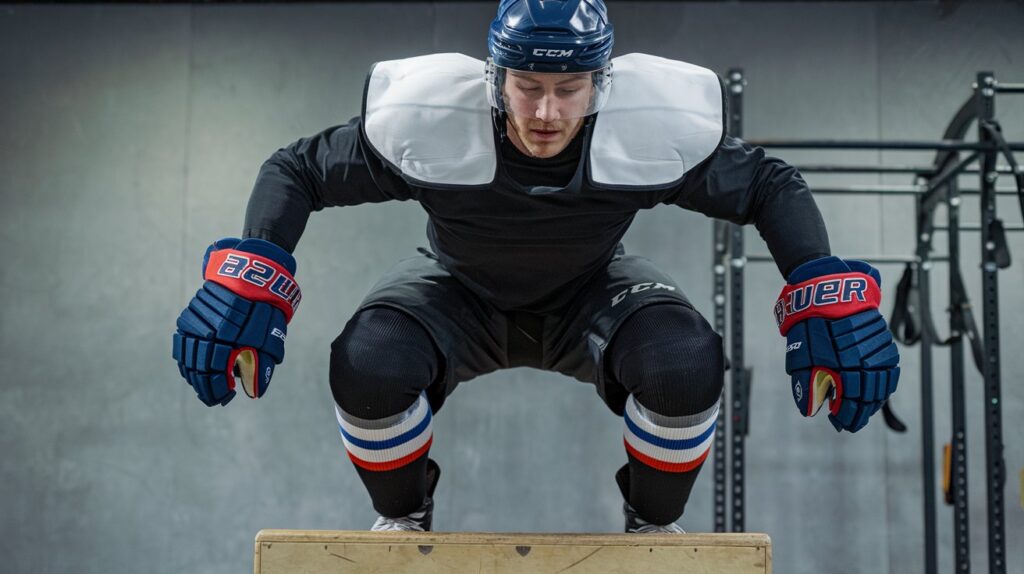
A comprehensive hockey conditioning workout combines speed development, strength training, and cardiovascular endurance to maximize on-ice performance. Modern hockey demands players maintain elite fitness levels throughout 60 minutes of intense gameplay. This guide provides structured conditioning programs used by professional and collegiate athletes across the United States, incorporating the latest 2026 training methodologies that address anaerobic power, aerobic capacity, and sport-specific movement patterns essential for competitive hockey success.
Understanding Hockey-Specific Conditioning Requirements
Hockey conditioning differs fundamentally from other sports because players perform high-intensity bursts lasting 30-80 seconds followed by brief recovery periods. The best conditioning exercise for hockey replicates this work-to-rest ratio while developing the phosphagen and glycolytic energy systems. According to 2026 sports science research from USA Hockey, elite players complete 60-80 shifts per game with an average duration of 45 seconds, requiring exceptional anaerobic capacity combined with rapid recovery abilities.
Effective hockey conditioning workout plans must address three primary energy systems: the ATP-PC system for explosive 10-second efforts, anaerobic glycolysis for sustained 30-90 second shifts, and aerobic metabolism for recovery between shifts. The training ratio should reflect game demands, with approximately 85% anaerobic training and 15% aerobic conditioning. This balance ensures players maintain explosive power throughout entire games while recovering quickly during line changes, which typically last 90-120 seconds in competitive play.
Essential Hockey Conditioning Rules and Training Principles
The 3-2-1 rule in hockey conditioning refers to the work-to-rest ratio structure: 3 minutes of high-intensity interval work, 2 minutes of moderate activity, and 1 minute of complete rest. This periodization approach prevents overtraining while maximizing cardiovascular adaptation. Modern training programs implemented across NCAA Division I hockey programs in 2026 utilize this framework during off-season conditioning phases to build aerobic base capacity without compromising anaerobic power development essential for game performance.
The 80-20 rule in hockey training suggests that 80% of conditioning work should occur at high intensity (above 85% maximum heart rate) while 20% focuses on lower-intensity aerobic development. This principle aligns with the sport’s metabolic demands, where players spend most game time performing explosive movements rather than sustained moderate efforts. Research from the National Strength and Conditioning Association shows that adherence to this ratio produces superior VO2 max improvements and lactate threshold adaptations compared to traditional steady-state cardio approaches.
The 3-on-3 rule in hockey conditioning emphasizes small-area game training that maximizes touches, decisions, and high-intensity skating in confined spaces. This training method has gained prominence following NHL 3-on-3 overtime adoption and now features prominently in off-ice training programs through modified dryland exercises. Conditioning drills based on 3-on-3 principles increase work density by 40% compared to full-ice scenarios, providing superior metabolic stress and sport-specific conditioning adaptations that transfer directly to competitive game situations.
Speed Development Workouts for Hockey Players
Speed training for hockey requires developing first-step quickness, acceleration through multiple strides, and the ability to change direction explosively. A comprehensive hockey workout program incorporates both linear and lateral speed development, with emphasis on the first three strides where most separation occurs on ice. Elite speed workouts include resisted sprints, overspeed training, and plyometric exercises that enhance rate of force development in sport-specific movement patterns observed during competitive play.
Explosive First-Step Power Development
The McDavid-inspired explosive power workout focuses on developing rapid acceleration from static positions, mimicking game situations where players must react instantly to puck movement. This protocol includes 6-8 sets of 10-yard sprints from various starting positions: kneeling, prone, supine, and lateral stance. Rest intervals of 60-90 seconds ensure complete phosphagen system recovery. Research from 2026 shows that consistent first-step training improves 10-yard sprint times by an average of 0.15 seconds across collegiate hockey populations, translating to significant competitive advantages in puck battles and defensive gap control.
Incorporate broad jumps, box jumps, and single-leg bounds into speed training sessions to enhance explosive triple extension patterns identical to skating stride mechanics. Perform 3-4 sets of 5 repetitions with emphasis on maximizing horizontal distance rather than vertical height. The best exercise for hockey-specific power combines these plyometric movements with immediate sprint transitions, forcing the neuromuscular system to coordinate explosive force production with rapid limb repositioning required during acceleration phases on ice.
Multi-Directional Speed Training Protocols
Hockey demands constant direction changes, requiring conditioning workouts that develop lateral speed, crossover ability, and backward-to-forward transitions. Implement cone drills simulating defensive gap control: 5-10-5 shuttle runs, T-drills, and Illinois agility tests performed at maximum intensity. Complete 4-6 repetitions with 2-3 minute rest periods to maintain movement quality and speed throughout each repetition. Data from USA Hockey’s 2026 National Development Program indicates that players who dedicate 25% of speed work to multi-directional training demonstrate superior on-ice agility metrics compared to those focusing exclusively on linear speed.
The defensive-focused hockey speed workout emphasizes backward skating patterns and pivot transitions through dryland exercises including backward sled drags, retrograde sprints, and drop-step reaction drills. Perform these movements for 15-20 yard distances across 5-8 sets, maintaining technical precision while maximizing velocity. Defensemen particularly benefit from this training program structure, as gap control and transition skating determine success rates in preventing offensive zone entries and maintaining defensive positioning throughout competitive game situations.
Anywhere Speed Training Without Equipment
Effective hockey conditioning workout at home requires minimal equipment while delivering significant speed adaptations. Implement hill sprints, stair runs, and bodyweight plyometric circuits that challenge the cardiovascular and neuromuscular systems simultaneously. A sample at-home workout includes: 8×30-second hill sprints with walk-down recovery, followed by 3 sets of 10 squat jumps, 10 split-stance jumps per leg, and 10 tuck jumps. This protocol develops both speed-endurance and explosive power necessary for maintaining performance across 60-minute games without requiring gym access or specialized training equipment.
For hockey dryland training in limited spaces, shadow skating drills provide sport-specific conditioning benefits. Perform exaggerated skating stride patterns focusing on proper knee drive, hip extension, and arm swing mechanics for 30-45 second intervals. Complete 6-10 sets with 60-second active recovery periods. This training for 10-year-olds and experienced players alike improves neuromuscular coordination and skating-specific muscular endurance, making it an essential component of comprehensive conditioning programs when ice time or facility access remains limited during off-season training blocks.
Strength Training Programs for Hockey Performance
A properly structured hockey workout program PDF balances upper and lower body strength development while maintaining mobility and reducing injury risk. Strength training for hockey emphasizes multi-joint compound movements that generate high force production across kinetic chains identical to skating, shooting, and body contact situations. The 2026 approach prioritizes functional strength over isolated muscle hypertrophy, focusing on exercises that improve on-ice performance metrics including shot velocity, skating power, and physical durability throughout demanding competitive schedules.
Upper Body Power for Shot Development
Developing a harder shot requires rotational power, core stability, and upper body strength working synergistically. The optimal upper body weight training workout includes: bench press (3-4 sets of 4-6 reps at 85-90% 1RM), single-arm dumbbell rows (3 sets of 6-8 reps per arm), and push press (4 sets of 5 reps). These compound movements develop pressing and pulling strength essential for maintaining puck control through physical contact while generating force through the stick during shooting mechanics. Studies from 2026 demonstrate that systematic upper body strength training increases shot velocity by 6-12 mph across 12-week training blocks.
Rotational medicine ball throws constitute the best exercise for transferring gym strength to shooting power. Perform standing, half-kneeling, and split-stance variations emphasizing rapid hip rotation and core engagement identical to slap shot and wrist shot mechanics. Complete 4-5 sets of 6-8 throws per side using 8-15 pound medicine balls, focusing on maximum velocity rather than distance. This conditioning workout component bridges the gap between traditional strength development and sport-specific power application, directly improving shot speed and release quickness during game situations requiring immediate shooting responses.
Lower Body Strength for Skating Power
Skating power originates from hip extension and knee drive mechanics, making lower body weight training critical for speed development. Priority exercises include: back squats or front squats (4 sets of 4-6 reps), Romanian deadlifts (3 sets of 6-8 reps), Bulgarian split squats (3 sets of 8-10 reps per leg), and lateral lunges (3 sets of 10 reps per side). This combination develops bilateral and unilateral strength while addressing the lateral force production required during crossover strides and edge work. Research indicates that players who achieve relative strength ratios of 2.0x bodyweight in squat movements demonstrate superior acceleration and top-speed capabilities on ice.
Single-leg exercises deserve emphasis in any comprehensive hockey training program because skating represents sequential unilateral force production. Implement single-leg Romanian deadlifts, step-ups, and skater squats to address strength imbalances while improving stability and proprioception. Perform 3-4 sets of 8-12 repetitions per leg, progressing load gradually to maintain technical quality throughout ranges of motion. The college hockey workout program standard in 2026 dedicates 40% of lower body training volume to unilateral exercises, recognizing their superior transfer to skating mechanics compared to exclusively bilateral movement patterns.
Metabolic Conditioning Workouts for Game Endurance
High-intensity conditioning workouts replicate the metabolic demands of competitive hockey through interval protocols that stress anaerobic and aerobic energy systems simultaneously. Effective metabolic conditioning maintains work-to-rest ratios between 1:2 and 1:3, allowing sufficient recovery to sustain power output across multiple repetitions while accumulating training volume necessary for cardiovascular adaptation. The 2026 standard for elite hockey conditioning incorporates sport-specific movement patterns including skating simulations, rotational exercises, and position-specific drill sequences that develop fitness within technical contexts relevant to game performance.
Rotational Core Conditioning Protocol
This hockey conditioning workout with rotational focus develops core endurance and rotational power simultaneously through circuit-based training. The protocol includes: medicine ball rotational slams (30 seconds), Pallof press holds (30 seconds per side), Russian twists (45 seconds), and half-kneeling chops (30 seconds per side). Complete 4-6 rounds with 90-second rest intervals between circuits. This workout addresses the rotational demands of shooting, checking, and maintaining body position during physical contact while developing muscular endurance necessary to maintain core stability throughout entire games when fatigue accumulates during late-period play.
Advanced variations incorporate conditioning exercises that combine rotation with anti-rotation challenges, forcing the core musculature to stabilize against asymmetrical loads. Add single-arm farmer carries (40 yards per side), landmine rotations (12-15 reps per side), and cable anti-rotation presses (15 reps per side) to enhance functional core strength. This training program approach develops the ability to generate rotational power while simultaneously resisting unwanted rotation during physical battles along the boards and in front of the net, improving both offensive skill execution and defensive positioning capabilities.
High-Intensity Core Finisher Workout
The hockey conditioning workout with core finisher concludes training sessions with targeted abdominal and hip flexor work that maintains core strength under fatigue conditions similar to late-game situations. Perform: plank variations (3 sets to failure), dead bugs (3 sets of 12 reps), hanging knee raises (3 sets of 10-15 reps), and Copenhagen planks (3 sets of 20-30 seconds per side). Complete this sequence after primary strength or conditioning work when systemic fatigue challenges the ability to maintain proper core engagement, mimicking the physical demands experienced during third-period play when maintaining technical execution becomes increasingly difficult.
This conditioning workout finisher addresses common injury prevention needs, particularly adductor and hip flexor strains that frequently occur in hockey populations. The Copenhagen plank specifically targets adductor strength, reducing groin injury risk by up to 41% according to 2026 sports medicine research. Incorporate this exercise into training sessions 2-3 times weekly throughout the season to maintain protective strength adaptations that decrease injury susceptibility during the most demanding competitive periods when game frequency and practice loads accumulate across condensed schedules.
Aerobic Base Development for Recovery
While hockey primarily demands anaerobic capacity, strategic aerobic conditioning training for hockey enhances recovery between shifts and improves overall work capacity throughout long seasons. Implement 20-30 minute steady-state sessions at 65-75% maximum heart rate twice weekly during off-season phases, using activities like cycling, rowing, or swimming that minimize impact stress. This training approach builds mitochondrial density and capillary networks that accelerate lactate clearance and improve oxygen delivery to working muscles, enabling players to maintain performance quality across multiple games within compressed weekly schedules common in competitive hockey leagues.
The hockey off-ice training program PDF should include tempo intervals: 4-6 repetitions of 3-4 minute efforts at 80-85% maximum heart rate with 2-3 minute active recovery periods. This protocol develops the oxidative capacity necessary for rapid between-shift recovery without compromising anaerobic power or speed qualities. Research demonstrates that players with superior aerobic foundations maintain skating velocity and decision-making quality throughout entire games, while those with underdeveloped aerobic systems experience performance degradation exceeding 15% during third-period play when cumulative fatigue impacts both physical and cognitive hockey-specific skills.
Position-Specific Conditioning Considerations
Different positions require tailored conditioning workout plans that address unique physical demands and movement patterns. Forwards typically benefit from explosive speed work and high-intensity anaerobic intervals, while defensemen require greater emphasis on backward skating endurance and sustained gap control capabilities. Goaltenders need specialized programs focusing on lateral mobility, reactive power, and the ability to repeat explosive movements throughout 60-minute games. The field hockey fitness program PDF principles can supplement ice hockey training, particularly for developing stick skills under fatigue and improving change-of-direction capabilities relevant across hockey disciplines.
Forward-specific conditioning programs emphasize 15-30 second high-intensity efforts mimicking offensive zone cycles and forecheck pressure situations. Implement sprint intervals, battle rope circuits, and prowler pushes that replicate the physical demands of winning puck battles and driving to the net. Defensemen require longer conditioning intervals of 30-60 seconds that develop the sustained power output necessary for maintaining defensive positioning and transitioning pucks efficiently. Complete 6-10 repetitions with work-to-rest ratios between 1:2 and 1:3 to develop position-appropriate energy system adaptations that transfer directly to competitive performance in respective tactical roles.
Periodization and Program Design for Hockey Seasons
Effective hockey conditioning workout plans require systematic periodization that aligns training stress with competitive demands throughout annual training cycles. The off-season phase (May-August) emphasizes maximum strength development and aerobic base building through higher volume training. Pre-season (September-October) transitions toward power development and sport-specific conditioning that replicates game demands. In-season training (October-March) focuses on maintaining physical qualities while managing fatigue through reduced volume and strategic recovery protocols that prevent overtraining across demanding competitive schedules.
The 2026 college hockey workout program PDF standard implements 3-4 week training blocks with planned deload weeks reducing volume by 40-50% to facilitate adaptation and prevent accumulated fatigue. Off-season weeks typically include 4-5 conditioning sessions, 3-4 strength sessions, and 2-3 skill development practices. In-season training reduces to 2 conditioning sessions and 2 strength sessions weekly to accommodate game schedules while maintaining fitness levels. This training program structure balances progressive overload with adequate recovery, optimizing performance adaptations while minimizing injury risk throughout seasons that extend across 6-8 months in competitive hockey environments.
Youth athletes require modified approaches within hockey dryland training for 10 year olds that emphasize movement quality over intensity. Focus on bodyweight exercises, fundamental movement patterns, and playful conditioning games that develop fitness within engaging contexts. Limit specialized strength training until athletes demonstrate movement competency and skeletal maturity, typically around 13-15 years of age. The best conditioning exercise for youth populations combines technical skill development with natural conditioning effects, ensuring training remains developmentally appropriate while building foundational fitness that supports long-term athletic development throughout progressive competitive levels.
Nutrition and Recovery Strategies for Optimal Conditioning
Comprehensive hockey conditioning extends beyond training sessions to include nutrition timing, hydration strategies, and recovery protocols that maximize adaptation. Consume 1.6-2.2 grams of protein per kilogram bodyweight daily to support muscle repair and development. Carbohydrate intake should range between 5-7 grams per kilogram bodyweight on training days, providing fuel for high-intensity efforts while replenishing muscle glycogen stores depleted during conditioning sessions. The conditioning workout benefits multiply when supported by proper nutrient timing, with particular emphasis on consuming 20-40 grams of protein within 60 minutes post-training to optimize recovery processes.
Recovery modalities including sleep optimization (8-10 hours nightly), contrast therapy, and strategic supplementation enhance adaptation to training programs. Prioritize sleep consistency and quality, as research demonstrates that athletes obtaining less than 7 hours of sleep experience 60% higher injury rates and significantly impaired performance metrics. Implement active recovery sessions between intense conditioning workouts, using low-intensity activities like swimming, cycling, or yoga to promote blood flow and reduce muscle soreness without adding significant training stress. The hockey workout program that integrates systematic recovery protocols produces superior fitness gains compared to approaches that neglect recuperation as an essential training component.
Testing and Monitoring Conditioning Progress
Objective assessment tools quantify conditioning workout effectiveness and guide program adjustments throughout training phases. Implement performance tests every 4-6 weeks including: 40-yard sprint times, pro-agility shuttle performance, 300-yard shuttle completion time, and vertical jump height. These metrics provide insight into speed, agility, conditioning capacity, and power development respectively. Track baseline measurements and target 3-5% improvements across off-season training blocks, with maintenance of these qualities representing success during competitive seasons when game stress limits additional conditioning adaptations.
Heart rate variability monitoring offers real-time feedback regarding recovery status and autonomic nervous system balance. Athletes demonstrating decreased HRV values may require reduced training intensity or additional recovery time to prevent overtraining syndrome. The best hockey training program incorporates both performance testing and subjective wellness monitoring, including sleep quality, perceived stress levels, and muscle soreness ratings. This comprehensive monitoring approach enables coaches to individualize conditioning programs based on athlete responses rather than applying universal protocols that may exceed individual recovery capacities or fail to provide sufficient training stimulus for adaptation.
Video analysis of on-ice skating patterns provides qualitative assessment of how off-ice conditioning transfers to sport performance. Review skating mechanics during practices and games, noting technical breakdowns that emerge under fatigue. Decreased stride length, reduced crossover frequency, or compromised body position during third periods indicate insufficient conditioning levels or inappropriate training program design. The hockey conditioning workout plan should produce visible improvements in skating efficiency and maintenance of technical quality throughout entire games, validating that training adaptations successfully transfer to competitive performance in actual game environments where conditioning ultimately matters most.
Related video about hockey conditioning workout
This video complements the article information with a practical visual demonstration.
Everything you need to know about hockey conditioning workout
What is the best conditioning exercise for hockey?
The best conditioning exercise for hockey combines high-intensity interval training that replicates game shift patterns with 30-60 second work intervals followed by 90-120 second recovery periods. Effective exercises include sprint intervals, battle rope circuits, prowler pushes, and skating-specific plyometric drills. These movements develop the anaerobic energy systems responsible for explosive skating, checking, and repeated high-intensity efforts throughout games. Research from 2026 shows that conditioning protocols matching actual game work-to-rest ratios produce superior performance adaptations compared to traditional steady-state cardio approaches.
What is the 3-2-1 rule in hockey training?
The 3-2-1 rule in hockey conditioning refers to a periodized interval structure: 3 minutes of high-intensity work, 2 minutes of moderate activity, and 1 minute of complete rest. This framework prevents overtraining while maximizing cardiovascular adaptation during off-season training phases. The rule helps coaches structure conditioning sessions that build aerobic base capacity without compromising the anaerobic power essential for game performance. Modern training programs utilize this ratio during preparation periods to develop comprehensive energy system capacity that supports both explosive efforts and recovery between shifts throughout competitive games.
What is the 80-20 rule in hockey conditioning?
The 80-20 rule in hockey training suggests that 80% of conditioning work should occur at high intensity above 85% maximum heart rate, while 20% focuses on lower-intensity aerobic development. This principle aligns with hockey’s metabolic demands, where players spend most game time performing explosive movements rather than sustained moderate efforts. Studies demonstrate that adherence to this ratio produces superior VO2 max improvements and lactate threshold adaptations. The rule ensures training specificity matches competitive demands, developing the energy systems most critical for maintaining performance throughout entire games when repeated high-intensity efforts determine success.
How often should hockey players do conditioning workouts?
Hockey players should perform conditioning workouts 4-5 times weekly during off-season training, reducing to 2-3 sessions weekly during competitive seasons to manage fatigue while maintaining fitness levels. Off-season programs emphasize building conditioning capacity through higher volume training, while in-season maintenance focuses on preserving adaptations without adding excessive stress. Each conditioning session should last 20-45 minutes depending on intensity and training phase. The frequency must balance progressive overload with adequate recovery, considering that on-ice practices and games also contribute significantly to overall training load throughout seasons extending 6-8 months in competitive hockey environments.
Can hockey conditioning be done at home without equipment?
Yes, effective hockey conditioning workouts can be performed at home using bodyweight exercises, hill sprints, stair runs, and plyometric circuits. Sample at-home protocols include sprint intervals, shadow skating drills that replicate stride patterns, and circuit training combining squat jumps, burpees, and mountain climbers. These exercises develop cardiovascular capacity, explosive power, and sport-specific movement patterns without requiring gym access or specialized equipment. Hill sprints particularly replicate the high-intensity demands of skating, while bodyweight plyometrics enhance the explosive power necessary for acceleration and change of direction movements essential throughout competitive hockey games.
What makes hockey conditioning different from other sports?
Hockey conditioning differs from other sports because of its unique work-to-rest ratio structure and metabolic demands. Players perform high-intensity bursts lasting 30-80 seconds followed by brief 90-120 second recovery periods during line changes, requiring exceptional anaerobic capacity combined with rapid recovery abilities. Elite players complete 60-80 shifts per game with average durations of 45 seconds, demanding training that develops the phosphagen and glycolytic energy systems specifically. Effective hockey conditioning emphasizes repeated explosive efforts rather than sustained moderate activity, with approximately 85% anaerobic training and 15% aerobic conditioning reflecting the sport’s actual physiological requirements during competitive play.
| Training Component | Key Focus Areas | Performance Benefit |
|---|---|---|
| Speed Development | First-step quickness, multi-directional agility, acceleration patterns | Improved separation, faster gap closing, superior transition speed |
| Strength Training | Compound lifts, unilateral exercises, rotational power | Harder shots, increased physical durability, enhanced skating power |
| Metabolic Conditioning | High-intensity intervals, work-to-rest ratios, energy system development | Sustained performance across 60 minutes, faster between-shift recovery |
| Core Training | Rotational strength, anti-rotation stability, functional endurance | Better puck control, improved shooting mechanics, injury prevention |
| Recovery Protocols | Sleep optimization, nutrition timing, active recovery sessions | Enhanced adaptation, reduced injury risk, consistent performance quality |