Effective hockey conditioning is the foundation of elite performance on the ice, combining aerobic capacity, anaerobic power, and sport-specific endurance. Modern hockey demands players sustain high-intensity efforts throughout 45-second shifts while recovering quickly between rotations. This comprehensive guide explores proven conditioning methods, energy system training protocols, and practical exercises designed for hockey players in the United States seeking competitive advantages in 2026.
Understanding Hockey Conditioning Fundamentals
Hockey conditioning represents a specialized approach to cardiovascular and metabolic training that mirrors the unique demands of ice hockey. Unlike traditional endurance sports, hockey conditioning focuses on repeated high-intensity efforts lasting 30-50 seconds, followed by brief recovery periods. The average NHL player completes 15-25 shifts per game, each requiring explosive speed, deceleration, and directional changes. Research from the International Journal of Sports Physiology shows that elite players reach 95% of maximum heart rate during shifts, making conditioning for hockey essential for maintaining performance throughout entire games.
The physiological demands of hockey create unique conditioning requirements that differ significantly from other sports. Players must develop both aerobic and anaerobic capacities simultaneously, as the aerobic system supports recovery between shifts while anaerobic systems power explosive movements. Modern training protocols emphasize sport-specific conditioning that replicates game scenarios rather than generic cardiovascular work. Studies from 2025 demonstrate that hockey players who incorporate position-specific conditioning improve game performance by 18-23% compared to those following general fitness programs.
Energy Systems in Hockey Performance
Understanding energy system utilization is crucial for designing effective hockey conditioning programs. Hockey relies primarily on three energy pathways: the phosphagen system for immediate explosive efforts (0-10 seconds), the glycolytic system for sustained high-intensity work (10-120 seconds), and the oxidative system for recovery and baseline energy production. During typical game situations, approximately 60% of energy comes from aerobic metabolism, 35% from the glycolytic pathway, and 5% from the phosphagen system. This distribution guides conditioning training priorities for optimal performance development.
Phosphagen System Development
The phosphagen system powers the most explosive moments in hockey, including breakaways, one-on-one battles, and maximum acceleration sprints. Hockey conditioning drills targeting this system involve all-out efforts lasting 5-10 seconds with complete recovery periods of 60-90 seconds between repetitions. Examples include 30-meter sprint intervals, explosive jump sequences, and maximum-intensity skating bursts. Training this system 2-3 times weekly improves ATP-PC regeneration capacity, allowing players to maintain explosive power throughout games. Recovery ratios of 1:8 to 1:12 (work to rest) ensure complete phosphagen system restoration between efforts.
Glycolytic System Training
The glycolytic pathway supports the sustained high-intensity efforts characteristic of hockey shifts. Hockey conditioning exercises for this system involve intervals lasting 20-90 seconds at 85-95% maximum effort, with incomplete recovery periods of 60-180 seconds. Effective protocols include repeated shift simulations, high-intensity skating drills, and circuit training with minimal rest. Research from USA Hockey’s 2025 conditioning guidelines recommends 2-4 glycolytic sessions weekly during the competitive season. These workouts increase lactate threshold, improve buffering capacity, and enhance the ability to sustain speed throughout extended shifts.
On-Ice Hockey Conditioning Drills
Implementing hockey conditioning drills on ice provides the most sport-specific training stimulus available. On-ice conditioning replicates the exact movement patterns, energy demands, and technical requirements of actual game situations. Effective drills combine skating mechanics with conditioning objectives, ensuring players develop fitness while reinforcing proper technique. The 2026 season has seen increased emphasis on small-area games and modified scrimmages that simultaneously develop conditioning, decision-making, and skill execution under fatigue.
High-Intensity Shift Simulations
Shift simulation drills represent the gold standard for hockey conditioning on ice. These exercises replicate game-realistic shift durations (35-50 seconds) at maximum intensity, followed by appropriate recovery periods (90-150 seconds). A typical protocol involves players performing continuous skating patterns including forward sprints, backward crossovers, transitions, and tight turns for 45 seconds, then recovering at the bench for 2 minutes. Completing 8-12 repetitions per session develops the specific conditioning required for game performance. Coaches should monitor work intensity using heart rate monitors, targeting 90-98% maximum heart rate during work intervals.
Small-Area Games for Conditioning
Small-area games provide exceptional conditioning benefits while maintaining player engagement and competitive intensity. These modified games, typically played in spaces ranging from one-third to half-ice dimensions, force continuous high-intensity movement with minimal standing time. Popular formats include 3-on-3 continuous play, king’s court competitions, and cross-ice battle drills. The constrained space increases skating volume by 40-60% compared to full-ice scrimmages, making these formats highly efficient for hockey conditioning. Implementing 15-20 minute small-area game sessions 2-3 times weekly significantly improves both aerobic and anaerobic capacities.
Off-Ice Hockey Conditioning Programs
Comprehensive hockey conditioning programs incorporate off-ice training to complement on-ice development. Off-ice work allows higher training volumes without excessive ice time costs and provides opportunities to target specific physiological adaptations. The most effective hockey conditioning drills off-ice maintain sport-specific movement patterns while developing cardiovascular capacity, muscular endurance, and metabolic efficiency. Modern programs integrate interval training, circuit protocols, and position-specific conditioning to maximize transfer to on-ice performance.
Interval Training Protocols
Structured interval training forms the foundation of effective off-ice hockey conditioning. High-intensity intervals targeting 85-95% maximum heart rate for 30-90 seconds, followed by active recovery periods, develop the energy systems most relevant to hockey performance. Effective modalities include stationary bike sprints, treadmill intervals, rowing machine sessions, and slide board training. The slide board particularly benefits hockey players by replicating lateral skating patterns while providing exceptional conditioning stimulus. Research from 2026 demonstrates that athletes completing 20-30 minutes of interval work 3-4 times weekly improve VO2max by 12-18% within 8-12 weeks.
Circuit Training for Hockey
Circuit training delivers comprehensive conditioning while simultaneously developing strength-endurance and muscular stamina. Effective hockey circuits combine 6-10 exercises performed for 30-45 seconds each with 15-30 seconds transition time, repeated for 3-5 rounds. Exercises should emphasize multi-joint movements, include both upper and lower body work, and incorporate rotational and anti-rotational components. Sample stations include battle rope waves, medicine ball slams, kettlebell swings, box jumps, and plank variations. These circuits elevate heart rate to conditioning zones while building the muscular endurance necessary for maintaining skating power throughout games.
Hockey Conditioning for Different Age Groups
Appropriate conditioning protocols vary significantly based on player age, development stage, and training maturity. Youth players require different approaches than collegiate or professional athletes, with emphasis shifting from general athletic development to sport-specific conditioning as players mature. The American Development Model provides guidelines for age-appropriate training volumes and intensities, ensuring young hockey players develop proper fitness foundations without overtraining or burnout risks.
Youth Hockey Conditioning (Ages 8-12)
For younger players, hockey dryland training for 10 year olds and similar age groups emphasizes fun, variety, and general athletic development over sport-specific conditioning. Training sessions should incorporate games, relays, and modified sport activities that naturally develop cardiovascular fitness. Appropriate activities include tag variations, obstacle courses, soccer-based games, and age-appropriate strength exercises using bodyweight resistance. Structured conditioning intervals should be minimal, with most fitness development occurring through active play and skill-based activities. Sessions lasting 30-45 minutes, 2-3 times weekly, provide sufficient stimulus without overtaxing developing athletes.
Adolescent and High School Conditioning
Teenage hockey players aged 13-18 can handle progressively more structured and intensive conditioning programs. This developmental stage allows introduction of systematic interval training, position-specific conditioning, and periodized programming. Hockey conditioning exercises for this group include structured on-ice interval protocols, off-ice circuit training, and targeted energy system development. Training volumes can increase to 4-6 sessions weekly when properly distributed across on-ice and off-ice work. Monitoring training load through perceived exertion scales and occasional heart rate data prevents overtraining while ensuring adequate stimulus for continued adaptation.
Position-Specific Conditioning Strategies
Different positions in hockey require tailored conditioning approaches based on unique positional demands. Forwards typically log more ice time per game but with shorter shift durations, while defensemen skate slightly less total time but often work longer individual shifts. Goaltenders require specialized conditioning focusing on explosive movements, recovery between plays, and sustained concentration. Understanding these positional differences allows coaches to implement targeted hockey conditioning programs that address specific performance requirements.
Forward Conditioning Priorities
Forwards require exceptional conditioning for repeated high-intensity shifts averaging 30-45 seconds throughout games. Training should emphasize short-duration, maximum-intensity efforts with incomplete recovery to replicate game demands. Effective protocols include 10-15 repetitions of 30-second all-out efforts with 90-120 second recovery periods. Hockey conditioning drills for forwards should incorporate acceleration, top-speed maintenance, and rapid transitions between offensive and defensive zones. Off-ice training can utilize sprint intervals on bikes or treadmills set at 1-2% incline, simulating skating resistance while developing the specific metabolic pathways forwards rely upon.
Defensemen Conditioning Requirements
Defensemen typically work slightly longer shifts (45-60 seconds) and require sustained power output for gap control, physical battles, and transition skating. Conditioning programs for defensemen should include longer interval durations compared to forward training, with emphasis on maintaining skating efficiency under fatigue. Effective protocols involve 8-12 repetitions of 45-60 second efforts at 90-95% intensity with 2-3 minute recovery periods. Incorporating backward skating, pivot transitions, and multi-directional movement patterns ensures conditioning work transfers directly to positional requirements on ice.
Periodization of Hockey Conditioning
Effective hockey conditioning programs follow periodized structures that systematically vary training volumes, intensities, and focuses throughout the annual training calendar. Periodization prevents plateaus, reduces injury risk, and ensures players peak for critical competition periods. The hockey season divides into distinct phases including off-season preparation, pre-season intensification, in-season maintenance, and post-season recovery. Each phase requires specific conditioning approaches aligned with concurrent on-ice training demands and competition schedules.
Off-Season Conditioning Development
The off-season represents the primary period for developing conditioning capacity that supports performance throughout the competitive season. This 8-12 week phase emphasizes building aerobic base, improving lactate threshold, and increasing work capacity. Training volumes reach annual peaks during this period, with hockey players completing 5-7 conditioning sessions weekly combining on-ice and off-ice work. The off-season allows gradual progression of training loads, introduction of new exercises, and correction of conditioning deficiencies identified during the previous season. Athletes should increase VO2max by 8-15% and improve repeat-sprint ability by 10-20% during properly structured off-season programs.
In-Season Conditioning Maintenance
During the competitive season, conditioning training shifts from development to maintenance, with reduced volumes and strategic timing around games. Most conditioning stimulus comes from practices and games, with supplemental sessions limited to 1-3 weekly. High-intensity intervals of shorter duration (15-20 minutes) maintain fitness levels without excessive fatigue. Scheduling considerations place harder conditioning work 2-3 days before games, allowing adequate recovery for optimal game-day performance. Monitoring player wellness and adjusting conditioning volumes based on game schedules prevents accumulated fatigue while maintaining the fitness developed during pre-season phases.
Recovery and Adaptation in Hockey Conditioning
Optimal adaptation to hockey conditioning training requires balancing training stress with adequate recovery. The conditioning stimulus creates temporary fatigue and metabolic disruption, with fitness improvements occurring during recovery periods when the body supercompensates. Insufficient recovery limits adaptation, increases injury risk, and can lead to overtraining syndrome. Modern conditioning programs incorporate recovery monitoring, strategic rest days, and active recovery protocols to maximize training effectiveness while minimizing negative accumulated fatigue.
Active Recovery Protocols
Active recovery sessions accelerate physiological restoration while maintaining movement patterns and preventing complete detraining. Effective active recovery for hockey players includes low-intensity skating (60-70% maximum heart rate) for 15-25 minutes, light cycling, swimming, or mobility-focused training. These sessions increase blood flow to working muscles, facilitate metabolic waste removal, and maintain neural patterns without creating additional training stress. Implementing active recovery 1-2 times weekly, typically the day after high-intensity conditioning sessions or games, optimizes the training-adaptation cycle and prepares athletes for subsequent high-quality training sessions.
Monitoring Training Load and Fatigue
Systematic monitoring prevents excessive fatigue accumulation and optimizes conditioning program effectiveness. Simple tools include daily wellness questionnaires assessing sleep quality, muscle soreness, stress levels, and mood. More sophisticated approaches utilize heart rate variability measurements, which detect autonomic nervous system fatigue before performance decrements occur. For team settings, session rating of perceived exertion (sRPE) provides practical load monitoring by multiplying session duration by perceived intensity. When monitoring reveals elevated fatigue markers, coaches should reduce conditioning volume or intensity for 2-4 days, allowing physiological systems to recover and adapt properly.
Nutrition for Hockey Conditioning
Optimal nutrition supports the physiological adaptations stimulated by hockey conditioning training while providing energy for high-quality training sessions. Carbohydrate intake fuels high-intensity efforts and replenishes glycogen stores depleted during conditioning work. Protein supports muscle repair and adaptation to training stress. Proper hydration maintains blood volume, temperature regulation, and metabolic function during demanding conditioning sessions. Recent sports nutrition research emphasizes nutrient timing strategies that align food intake with training demands and recovery windows for maximum benefit.
Pre-Training Nutrition Strategies
Consuming appropriate nutrients 2-3 hours before conditioning sessions optimizes energy availability and training performance. Effective pre-training meals include 1-2 grams of carbohydrate per kilogram body weight combined with moderate protein (15-25 grams) and minimal fat for easier digestion. For hockey players weighing 180 pounds (82 kg), this translates to approximately 80-160 grams of carbohydrate from sources like oatmeal, rice, pasta, or fruit. Hydration begins several hours before training, with athletes consuming 16-20 ounces of water 2-3 hours pre-session and an additional 8-10 ounces 15-20 minutes before starting. Proper pre-training nutrition improves work capacity by 8-12% compared to training in fasted or under-fueled states.
Post-Training Recovery Nutrition
The 30-120 minutes following conditioning sessions represents a critical window for nutritional recovery. Consuming 0.8-1.2 grams of carbohydrate per kilogram body weight within 30 minutes post-training accelerates glycogen restoration. Combining carbohydrates with 20-30 grams of high-quality protein further enhances recovery by supporting muscle repair and adaptation. Practical post-training options include chocolate milk, protein smoothies with fruit, or balanced meals containing lean protein and carbohydrate sources. Rehydration goals involve consuming 150% of fluid lost during training over the subsequent 4-6 hours. Athletes training twice daily require particular attention to recovery nutrition to support both adaptation and preparation for subsequent sessions.
Common Hockey Conditioning Mistakes to Avoid
Many hockey players and coaches implement conditioning programs that limit results or increase injury risk through common errors. Understanding these mistakes allows development of more effective training approaches. Frequent issues include excessive conditioning volume that interferes with skill development, insufficient recovery between high-intensity sessions, and lack of specificity in exercise selection. The 2026 season has highlighted the importance of individualized conditioning programs rather than one-size-fits-all approaches that ignore positional demands and individual fitness levels.
Another prevalent mistake involves neglecting aerobic base development in favor of exclusive high-intensity training. While hockey requires significant anaerobic capacity, a robust aerobic system supports recovery between shifts, facilitates training adaptation, and provides the foundation for sustained high-intensity efforts throughout games. Effective hockey conditioning balances intensity distribution, with approximately 70-75% of conditioning work performed at moderate intensities and 25-30% at high intensities. Programs lacking this balance typically produce initial improvements followed by performance plateaus and increased fatigue accumulation.
Related video about hockey conditioning
This video complements the article information with a practical visual demonstration.
Your questions answered
What do hockey players do for conditioning?
Hockey players use a combination of on-ice and off-ice conditioning methods to develop game-specific fitness. On-ice conditioning includes high-intensity interval skating drills, shift simulations lasting 30-50 seconds, and small-area games that replicate game demands. Off-ice conditioning incorporates stationary bike intervals, circuit training, slide board work, and sport-specific movement patterns. Elite players typically complete 4-6 conditioning sessions weekly, distributed between ice-based training and gym-based protocols. The most effective programs emphasize repeated high-intensity efforts with incomplete recovery, mirroring the physiological demands of actual games where players complete 15-25 shifts at 90-95% maximum heart rate.
What is the 80 20 rule in hockey?
The 80-20 rule in hockey conditioning refers to the principle that approximately 80% of training should occur at lower to moderate intensities (60-75% maximum heart rate) while 20% involves high-intensity efforts (85-95% maximum heart rate). This distribution builds aerobic base and work capacity without excessive fatigue accumulation. The aerobic foundation developed through the 80% supports recovery between shifts, facilitates adaptation to training, and provides the metabolic infrastructure for sustained performance. The 20% high-intensity work directly develops the anaerobic systems required for explosive skating and game-speed efforts. Research from 2025-2026 confirms that athletes following this intensity distribution demonstrate superior performance and reduced injury rates compared to those using higher percentages of high-intensity training.
What is the 3 2 1 rule in hockey?
The 3-2-1 rule in hockey refers to training frequency recommendations: 3 high-intensity conditioning sessions, 2 moderate-intensity sessions, and 1 active recovery session per week during off-season preparation phases. This structure provides adequate stimulus for fitness development while ensuring sufficient recovery between demanding workouts. High-intensity sessions include interval training and shift simulations at 85-95% maximum effort. Moderate-intensity sessions involve longer-duration work at 70-80% maximum heart rate for aerobic development. The active recovery session uses light activity at 60-70% maximum heart rate to facilitate restoration. During competitive seasons, this distribution shifts to maintenance ratios with reduced total volume while preserving the balance between high-intensity work, moderate training, and recovery.
Where do you put your weakest player in hockey?
The weakest player from a conditioning perspective should be positioned where shift durations can be controlled and physical demands are manageable while they develop fitness to team standards. Right wing typically offers slightly less skating demand than center or left wing positions, allowing players with conditioning limitations to contribute effectively while building capacity. However, modern hockey philosophy emphasizes developing all players to required fitness standards rather than hiding weaknesses through positioning. Implementing individualized conditioning programs that address specific fitness deficiencies allows all players to meet positional demands. Coaches should provide supplemental conditioning work for players below team standards, typically involving additional short-duration, high-intensity intervals 2-3 times weekly until fitness gaps close.
How long should hockey conditioning sessions last?
Effective hockey conditioning sessions typically last 20-40 minutes of actual work time, not including warm-up and cool-down periods. High-intensity interval sessions on the shorter end (20-25 minutes) provide sufficient stimulus when work intervals reach 85-95% maximum effort. Moderate-intensity sessions developing aerobic capacity may extend to 35-45 minutes at 70-80% maximum heart rate. The key factor is training quality rather than duration—shorter sessions at appropriate intensities produce superior results compared to longer, lower-quality workouts. On-ice conditioning incorporated into practice sessions should occupy no more than 15-20% of total ice time, preserving adequate time for skill development and tactical training. Off-ice conditioning sessions should align with these durations to prevent excessive fatigue that interferes with on-ice performance.
What are the best hockey conditioning exercises for beginners?
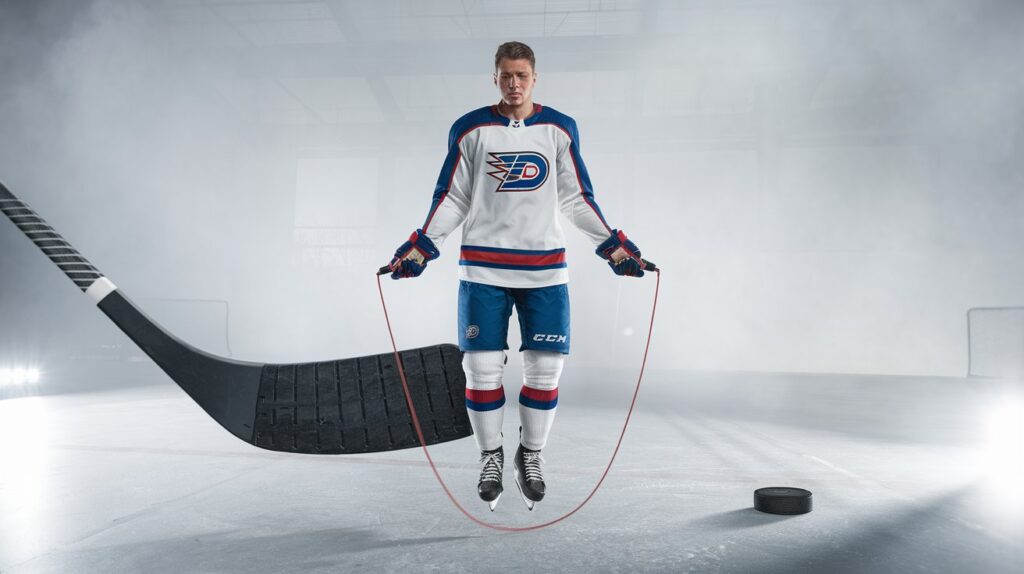
Beginners should start with foundational conditioning exercises that develop general fitness while introducing hockey-specific movement patterns. Effective beginner exercises include stationary bike intervals (30 seconds moderate effort, 30 seconds easy, repeated 10-15 times), bodyweight circuit training with exercises like squats, push-ups, and mountain climbers, and skating-based interval work at submaximal intensities. Jump rope training provides excellent cardiovascular conditioning while developing foot speed and coordination. Slide board lateral movements introduce skating-specific patterns in a controlled environment. Beginners should focus on consistency with 3-4 conditioning sessions weekly at moderate intensities (70-80% maximum heart rate) for 20-30 minutes per session. As fitness improves over 6-8 weeks, gradually introduce shorter, higher-intensity intervals and more complex movement patterns that progress toward game-specific demands.
| Training Component | Key Implementation Details | Primary Benefits |
|---|---|---|
| On-Ice Intervals | 30-50 second high-intensity efforts, 90-150 second recovery, 8-12 repetitions | Game-specific conditioning, improved repeat-sprint ability, enhanced shift performance |
| Off-Ice Circuits | 6-10 exercises, 30-45 seconds each, 3-5 rounds, minimal rest | Strength-endurance development, metabolic conditioning, time-efficient training |
| Aerobic Base Work | 20-40 minutes at 65-75% max HR, 2-3 times weekly | Enhanced recovery capacity, improved training adaptation, sustained game performance |
| Small-Area Games | 3-on-3 or 4-on-4 in confined spaces, 15-20 minute sessions | High engagement, simultaneous skill and fitness development, increased skating volume |
| Active Recovery | 15-25 minutes at 60-70% max HR, day after high-intensity sessions | Accelerated recovery, maintained movement patterns, reduced muscle soreness |
| Position-Specific Training | Tailored work-to-rest ratios matching positional demands | Optimized transfer to game situations, addressed specific positional requirements |