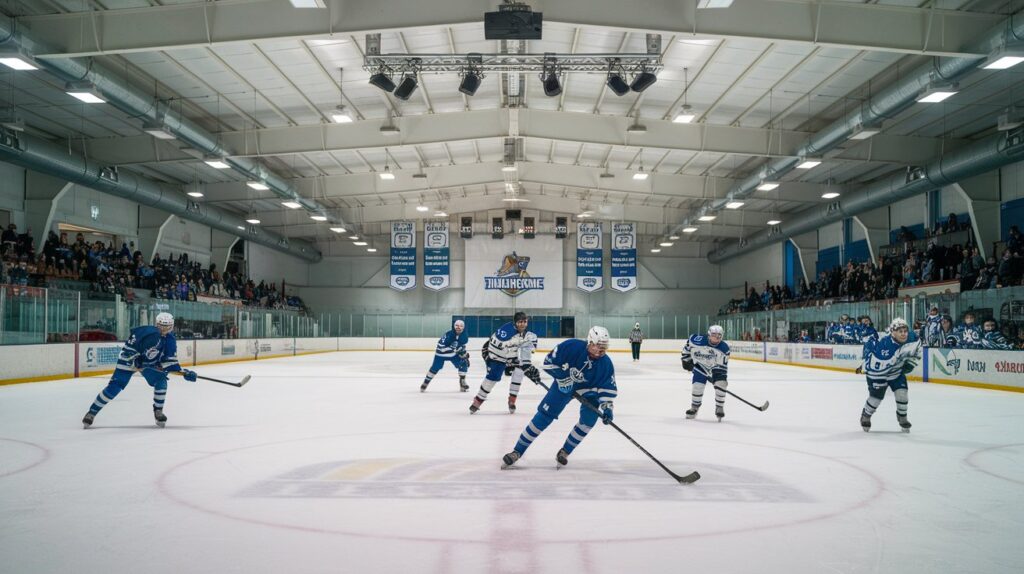
Canada’s junior hockey system represents the premier development pathway for young players aspiring to reach professional levels. In 2026, the landscape includes three major tiers of junior hockey leagues spanning from coast to coast, with the Canadian Hockey League (CHL) standing as the pinnacle. Understanding the structure, opportunities, and differences between junior A, B, and C leagues is essential for American families considering cross-border hockey development options.
Understanding the Canadian Junior Hockey System
The Canadian junior hockey structure operates under Hockey Canada’s jurisdiction and divides into three distinct tiers based on skill level, competition intensity, and professional development potential. The tier system in Canadian junior hockey provides clear pathways from community-level play to elite professional prospects. In 2026, approximately 45,000 players participate across all levels of junior hockey in Canada, with roughly 1,800 competing in the top-tier CHL. This hierarchical structure ensures players compete at appropriate skill levels while maintaining opportunities for advancement. The best junior hockey leagues in Canada consistently produce NHL draft picks, with the CHL contributing over 50% of drafted players annually.
For American families, understanding these tiers helps identify the right development pathway for their athletes. Each tier offers distinct advantages regarding competition level, academic flexibility, NCAA eligibility considerations, and professional exposure. The system’s organization reflects Canada’s deep hockey culture and commitment to structured player development that balances athletic achievement with educational opportunities.
The Canadian Hockey League (CHL): Top-Tier Junior Hockey
The Canadian Hockey League represents the highest level of junior hockey in Canada, comprising three major regional leagues that collectively form the country’s elite development circuit. In 2026, the CHL operates 60 teams across the Ontario Hockey League (OHL), Western Hockey League (WHL), and Quebec Maritimes Junior Hockey League (QMJHL). The CHL talent pipeline remains the primary source for NHL prospects, with the 2026 NHL Draft in Buffalo expected to feature over 120 CHL players selected. These leagues provide professional-caliber coaching, facilities, and competition while maintaining junior eligibility status.
Ontario Hockey League (OHL) Structure
The OHL operates 20 teams across Ontario and select American markets in 2026, featuring cities like Toronto, Ottawa, London, and Saginaw, Michigan. The league maintains the highest attendance figures among CHL circuits, averaging 3,800 fans per game during the 2025-2026 season. OHL teams play a 68-game regular season schedule from September through March, followed by playoff competition for the J. Ross Robertson Cup. The league’s proximity to major NHL markets and scouting centers makes it particularly attractive for American players seeking exposure to professional scouts and development staff.
Notable OHL franchises include the London Knights, consistently ranked among junior hockey’s premier organizations, and the Ottawa 67’s, who have produced numerous NHL stars. The league mandates that teams provide players with educational packages covering post-secondary tuition, ensuring academic opportunities alongside athletic development. In 2026, approximately 480 players compete in the OHL, with 15-18% coming from the United States.
Western Hockey League (WHL) Coverage
The WHL spans four Canadian provinces and select American states, operating 22 teams from British Columbia to Manitoba and down through Washington, Oregon, and beyond. This geographic diversity creates unique travel experiences and exposure to varied playing styles across North American junior hockey. The 2025-2026 season features teams like the Portland Winterhawks, Everett Silvertips, and Saskatoon Blades competing in a 68-game schedule culminating in playoffs for the Ed Chynoweth Cup.
The WHL’s American division provides convenient options for U.S. families preferring closer proximity while accessing CHL-level competition. The league produces exceptional goaltending talent and two-way forwards, with WHL alumni including Carter Hart, Mathew Barzal, and Cale Makar leading the professional ranks. Educational commitments mirror the OHL, with teams funding post-secondary scholarships worth up to $80,000 CAD for players completing their junior careers.
Quebec Maritimes Junior Hockey League (QMJHL) Features
The QMJHL operates 18 teams across Quebec and the Maritime provinces, offering a unique French-Canadian hockey culture combined with elite development opportunities. The league’s 2025-2026 season showcases franchises like the Halifax Mooseheads, Moncton Wildcats, and Quebec Remparts in a 68-game regular season competing for the President’s Cup. The QMJHL traditionally emphasizes offensive skill development and features higher-scoring games compared to other CHL circuits.
For American players, the QMJHL presents cultural immersion opportunities alongside hockey development, with several teams located in bilingual markets. The league has produced elite talent including Sidney Crosby, Nathan MacKinnon, and Alexis Lafrenière. Teams provide comprehensive support services including language training, academic tutoring, and billet family placement to ensure player success both on and off the ice.
Junior A Hockey Leagues Across Canada
Below the CHL tier, Junior A hockey represents the second competitive level in Canada’s development system, featuring regional leagues that maintain high standards while preserving NCAA eligibility for players. In 2026, approximately 2,400 players compete across ten recognized Junior A leagues under Hockey Canada sanctioning. These leagues offer excellent development opportunities for players seeking college hockey pathways or those progressing toward higher junior levels. The top Junior A leagues include the British Columbia Hockey League (BCHL), Alberta Junior Hockey League (AJHL), and Ontario Junior Hockey League (OJHL).
Junior A competition features players aged 16-20 in most leagues, with team rosters limited to 23 players and games played in intimate community arenas averaging 1,200-2,500 seating capacity. The regular season typically runs 54-58 games from September through March, followed by league playoffs and potential advancement to the Centennial Cup national championship. For American families, Junior A leagues provide cost-effective development with strong academic support and maintained NCAA eligibility.
British Columbia Hockey League (BCHL)
The BCHL operates 18 teams across British Columbia and recently expanded into Alberta, making it one of Canada’s premier Junior A circuits. The league withdrew from Hockey Canada sanctioning in 2023 to operate independently while maintaining NCAA eligibility guarantees for all participants. This strategic move positioned the BCHL as the top destination for American players pursuing college hockey scholarships through Canadian junior development. The 2025-2026 season features highly competitive play with former BCHL players populating NCAA Division I rosters.
Teams like the Penticton Vees, winners of multiple national championships, and the Chilliwack Chiefs provide professional-level coaching and facilities. The BCHL mandates educational programs with partnerships at British Columbia universities and colleges, offering players academic credits during their junior careers. Average attendance exceeds 850 fans per game, creating energetic environments for player development.
Alberta Junior Hockey League (AJHL)
The AJHL features 16 teams across Alberta competing in one of Western Canada’s most respected Junior A leagues. The 2025-2026 season showcases traditional powerhouses like the Brooks Bandits, who have captured multiple national championships and consistently send players to NCAA programs. The league maintains Hockey Canada affiliation while producing exceptional talent for both college and professional pathways. AJHL alumni include over 350 players who have reached NCAA Division I programs in recent years.
The league’s commitment to player education includes partnerships with Alberta colleges and universities, providing tuition packages and academic support services. Teams operate in communities ranging from 5,000 to 1.3 million residents, offering diverse cultural experiences. The AJHL plays a 54-game regular season with intense playoff competition determining league champions and Centennial Cup representatives.
Ontario Junior Hockey League (OJHL)
The OJHL operates 22 teams across Ontario, representing the province’s premier Junior A circuit and a significant NCAA feeder league. Located in hockey-rich communities from Toronto suburbs to Ottawa, the league provides accessible development opportunities for players throughout Canada’s most populous province. The 2025-2026 season features competitive balance with multiple teams capable of championship contention and strong coaching staffs with professional experience.
The OJHL maintains strict academic standards, requiring players to pursue post-secondary education or high school completion during their junior careers. League partnerships with Ontario universities create pathways to Canadian Interuniversity Sport (CIS) hockey programs alongside NCAA opportunities. Teams invest heavily in player development infrastructure, with several franchises operating dedicated training facilities and sports science programs. The OJHL sends approximately 80-100 players annually to NCAA Division I and Division III programs.
Other Notable Junior A Leagues
Additional Junior A leagues provide regional development opportunities across Canada. The Manitoba Junior Hockey League (MJHL) operates 12 teams with strong community connections and sends players to college programs. The Saskatchewan Junior Hockey League (SJHL) features 12 teams in prairie communities with passionate fan bases. The Superior International Junior Hockey League (SIJHL) serves Northern Ontario communities, while the Maritime Hockey League (MHL) covers Atlantic Canada with competitive development programs.
These regional leagues maintain Hockey Canada sanctioning and offer players pathways to advancement through strong coaching, structured development programs, and scouting exposure. The Central Canada Hockey League (recently rebranded as the Capital Junior Hockey League in some regions) operates in Eastern Ontario and Western Quebec, providing bilingual development opportunities. Each league contributes approximately 30-60 players annually to college hockey programs across North America.
Junior B and Junior C Development Levels
The third tier of Canadian junior hockey includes Junior B and Junior C leagues operating at community and regional levels with focus on development, education, and local competition. In 2026, approximately 8,500 players participate across 40+ Junior B leagues and numerous Junior C circuits throughout Canada. These levels serve players developing their skills, pursuing local hockey opportunities while maintaining school or work commitments, or continuing hockey careers in community-focused environments. Junior B hockey features players aged 16-21 competing in 40-48 game regular seasons with lower travel commitments than higher tiers.
For American families, these levels rarely attract cross-border participation due to limited development infrastructure and regional focus. However, they represent the grassroots foundation of Canadian hockey culture, producing passionate players who contribute to community hockey traditions. Junior B leagues operate under provincial hockey associations with varied competitive standards depending on geographic location and population density. Some Junior B leagues in hockey-rich Ontario communities rival Junior A quality in other provinces.
How Many Junior Hockey Leagues Operate in Canada
In 2026, Canada hosts approximately 65-70 organized junior hockey leagues across all three tiers when including CHL circuits, Junior A leagues, and the numerous Junior B and C regional competitions. The exact count fluctuates annually as leagues merge, rebrand, or adjust operational structures. The three CHL leagues (OHL, WHL, QMJHL) comprise the top tier, while approximately 10 recognized Junior A leagues form the second tier. The remaining 50+ leagues operate at Junior B and Junior C levels under provincial hockey association governance.
This extensive network reflects Canada’s unparalleled hockey infrastructure and cultural commitment to the sport’s development at all levels. The system provides playing opportunities for athletes of varying skill levels from coast to coast, ensuring that passionate players find appropriate competition regardless of professional aspirations. For perspective, the United States operates approximately 15-20 comparable junior leagues across similar competitive tiers, highlighting Canada’s disproportionate hockey development infrastructure relative to population size.
Choosing the Right Junior Hockey League
Selecting the appropriate junior hockey league requires careful evaluation of athletic goals, academic priorities, geographic preferences, and professional aspirations. American families should consider whether their athlete prioritizes NHL draft potential (favoring CHL participation), NCAA Division I opportunities (favoring Junior A with maintained eligibility), or balanced development with academic focus. The decision impacts not only hockey development but also educational pathways, living situations, and financial investments over 2-4 years of junior hockey participation.
Key factors include the league’s competitive level, coaching quality and professional experience, academic support programs and educational partnerships, scouting exposure and professional connections, and proximity to family or preference for cultural immersion. Consulting with player advisors, coaches, and current players provides valuable insights into league cultures, team organizations, and development track records. The best junior hockey league varies by individual circumstance rather than absolute rankings.
CHL vs Junior A: NCAA Eligibility Considerations
The most critical decision for American players involves choosing between CHL participation, which forfeits NCAA eligibility, and Junior A leagues that preserve college hockey options. The CHL provides superior competition, professional-caliber development, and direct NHL pathways but eliminates NCAA Division I, II, and III opportunities. Players signing CHL standard player agreements receive educational packages covering Canadian university tuition but cannot accept NCAA athletic scholarships. This trade-off requires honest assessment of NHL potential versus college hockey aspirations.
Junior A leagues, particularly the BCHL, AJHL, and OJHL, maintain NCAA eligibility while offering strong development infrastructure and college placement track records. These leagues send hundreds of players annually to NCAA programs, with top performers receiving full athletic scholarships to Division I programs. For players with legitimate NHL potential, the CHL provides optimal development. For players targeting college hockey with professional aspirations as secondary goals, Junior A offers safer pathways with maintained academic options.
Geographic and Cultural Factors
Geographic location significantly impacts the junior hockey experience for American players and their families. Proximity to home affects visitation frequency, travel costs, and family support availability during the demanding junior hockey season. Western American families may prefer WHL teams in Washington, Oregon, or Western Canada, while Eastern families might favor OHL franchises in Michigan or nearby Ontario cities. The BCHL’s British Columbia and Alberta locations offer moderate travel distances for West Coast families.
Cultural considerations include language differences in Quebec-based QMJHL markets, small-town Canadian experiences versus urban environments, and billet family living arrangements in unfamiliar communities. American players must adapt to Canadian hockey culture, metric measurements, different educational systems, and occasional anti-American sentiments in passionate hockey markets. These factors, while manageable, require maturity and adaptability from young athletes living independently for the first time.
2026 Junior Hockey Standings and Competitive Landscape
The 2025-2026 season showcases exceptional competitive balance across Canadian junior hockey leagues with multiple teams contending for championships in each circuit. In the OHL, the London Knights and Saginaw Spirit lead their respective conferences with dominant regular season performances. The WHL features tight races with the Portland Winterhawks, Everett Silvertips, and Saskatoon Blades separated by minimal points. The QMJHL sees the Halifax Mooseheads and Quebec Remparts battling for conference supremacy with high-scoring offensive displays.
Junior A standings reflect regional competitive strengths with the BCHL’s Penticton Vees and Vernon Vipers maintaining top positions, the AJHL’s Brooks Bandits continuing their dynasty, and the OJHL featuring balanced competition among Toronto-area franchises. These standings fluctuate weekly as teams navigate grueling schedules, player call-ups to professional levels, and playoff positioning battles. Current standings and complete league statistics are available through official league websites and Hockey Canada resources.
The Path from Junior Hockey to Professional Careers
Canadian junior hockey serves as the primary development pathway for professional hockey careers, producing the majority of NHL players competing in 2026. Approximately 45% of current NHL rosters developed through the CHL system, while another 30% played NCAA Division I hockey, many after Junior A careers in Canada. The pathway typically involves 2-4 years of junior hockey from ages 16-20, followed by professional contracts, college hockey, or advanced junior opportunities depending on development trajectories and draft status.
The CHL-NHL pipeline remains most direct, with top prospects drafted after one or two junior seasons and transitioning to professional hockey by ages 19-20. Junior A graduates typically pursue NCAA Division I programs, developing for 3-4 college seasons before professional opportunities emerge around ages 22-24. Some players advance through Canadian university hockey, European professional leagues, or North American minor professional circuits. Success rates vary significantly, with approximately 5% of junior hockey players reaching professional levels and less than 1% achieving sustained NHL careers.
Costs and Commitments for Junior Hockey Participation
Participating in Canadian junior hockey involves significant financial and time commitments that families must carefully consider. CHL participation typically incurs minimal direct costs, as teams provide equipment, training, housing through billet families, and educational packages worth $35,000-$80,000 CAD. However, families face travel expenses for visits, personal equipment preferences, and incidental living costs. Players commit to 68-game seasons plus playoffs, extensive practice schedules, strength and conditioning programs, and educational requirements during a 10-month season from August through May.
Junior A hockey involves more variable costs depending on the league and team. Some organizations charge player fees ranging from $3,000-$8,000 annually covering ice time, travel, and administrative costs, though top-tier Junior A programs increasingly operate cost-free for players. Families should budget for equipment ($1,500-$3,000 annually), travel to games and visits ($2,000-$5,000), housing if not provided ($8,000-$12,000), and incidental expenses. The time commitment matches CHL demands with full-time hockey focus requiring players to defer or balance educational pursuits strategically.
Related video about junior hockey leagues in canada
This video complements the article information with a practical visual demonstration.
FAQ – Common Questions
How many junior hockey leagues are there in Canada?
Canada hosts approximately 65-70 organized junior hockey leagues in 2026 across all competitive tiers. This includes the three Canadian Hockey League circuits (OHL, WHL, QMJHL) at the top tier, roughly 10 recognized Junior A leagues at the second tier, and 50+ Junior B and Junior C leagues operating at regional and community levels under provincial hockey association governance. The exact number fluctuates as leagues merge, rebrand, or adjust structures, but Canada maintains the world’s most extensive junior hockey infrastructure with opportunities for players of all skill levels from coast to coast.
What are the tiers of junior hockey in Canada?
Canadian junior hockey operates in three distinct tiers under Hockey Canada’s structure. Tier 1 consists of the Canadian Hockey League (CHL), including the OHL, WHL, and QMJHL, representing elite major junior hockey with 60 teams and direct NHL development pathways. Tier 2 comprises Junior A leagues like the BCHL, AJHL, and OJHL, featuring high-level competition while maintaining NCAA eligibility for approximately 2,400 players. Tier 3 includes Junior B and Junior C leagues operating at community and regional levels with focus on local development, education balance, and grassroots hockey participation for roughly 8,500 players.
What is the best junior hockey league in Canada?
The Canadian Hockey League represents the best junior hockey in Canada, serving as the premier development circuit for NHL prospects. Among the three CHL leagues, rankings vary by evaluation criteria, but the Ontario Hockey League traditionally produces the most NHL draft picks annually due to its proximity to major markets and scouting centers. However, the Western Hockey League and Quebec Maritimes Junior Hockey League also develop exceptional talent with different stylistic emphases. For players maintaining NCAA eligibility, the British Columbia Hockey League stands as the top Junior A league following its 2023 independence, consistently sending the most players to NCAA Division I programs.
Can American players join Canadian junior hockey leagues?
American players can absolutely join Canadian junior hockey leagues and increasingly do so for development opportunities. In 2026, approximately 15-18% of CHL rosters consist of American players, with the OHL and WHL particularly accessible due to geographic proximity. Junior A leagues, especially the BCHL, actively recruit American players seeking NCAA pathways. The process requires obtaining proper immigration documentation for extended stays in Canada, securing billet family housing, and meeting league eligibility requirements. American families should consider NCAA eligibility implications for CHL participation, geographic logistics, cultural adjustments, and educational program compatibility when evaluating Canadian junior hockey options.
Do junior hockey players in Canada get paid?
Canadian junior hockey players do not receive traditional salaries but receive comprehensive support packages. CHL players sign standard player agreements providing weekly stipends ($50-$120 depending on league and year), complete equipment, billet family housing, meals, educational packages covering post-secondary tuition worth $35,000-$80,000 CAD, and transportation to games. Junior A players typically receive similar benefits without monetary stipends, though some leagues provide educational scholarships and living arrangements. These packages ensure players focus on development without financial burdens while maintaining junior amateur status. Players cannot accept payment beyond these structured benefits without jeopardizing eligibility.
What happens to junior hockey players who don’t make professional leagues?
The majority of junior hockey players who don’t reach professional levels leverage their educational benefits for post-secondary education. CHL players receive scholarship packages covering Canadian university tuition for every year played, enabling degree completion at institutions like University of Alberta, Western University, or McGill University. Junior A players maintain NCAA eligibility and frequently secure athletic scholarships to Division I, II, or III programs. Many continue playing in Canadian university hockey (U Sports) or pursue careers outside hockey using skills developed through junior hockey including leadership, time management, and competitive drive. The educational support ensures players have viable pathways beyond professional hockey aspirations.
| League Tier | Key Characteristics | Best For |
|---|---|---|
| CHL (OHL, WHL, QMJHL) | 60 teams, elite competition, 68-game seasons, professional development, educational packages, forfeits NCAA eligibility | Elite prospects targeting NHL careers with legitimate professional potential |
| Junior A (BCHL, AJHL, OJHL) | 10 leagues, 2,400 players, maintains NCAA eligibility, strong college placement, 54-58 game seasons | Players targeting NCAA Division I programs while maintaining professional aspirations |
| Junior B/C | 50+ regional leagues, 8,500 players, community focus, 40-48 game seasons, local development emphasis | Community players balancing hockey with education or work commitments |
| Geographic Reach | Coast-to-coast coverage across 10 provinces, select American markets in border states | Families seeking proximity options or cultural immersion experiences |
| Annual Participation | Approximately 45,000 total players across all tiers with 1,800 in CHL | Demonstrates extensive opportunities at multiple competitive levels |